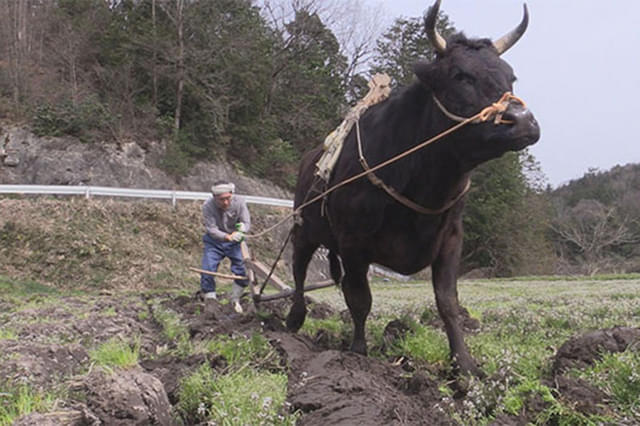
中国山地 牛と人風土記
古くから牛と人が強い絆で結ばれてきた中国山地を舞台に、近代化と過疎化のなかで失われゆく生活文化史を記録したドキュメンタリー。 中国山地各地では、昭和30年代まで「牛馬市」という競り市が開かれていた。特に島根県邑南町では、出羽・亀谷・阿須那などで大規模な牛馬市が開かれ、昭和の最盛期には出羽牛馬市に8000頭以上もの牛馬が、博労と呼ばれる家畜商に連れられて集まったという。市には露天商やサーカスなどの催しも出されたことから多くの人々で賑わい、地元の農家や住民が牛馬宿をしつらえるなど、地域経済を支える一大産業となった。農業の近代化以前、牛は農耕や荷役を担う重要な労働力であり、家族同様に大切にされていた。しかし近年では過疎化が進み、各地で伝承されてきた地域の生活文化や精神文化は消滅しつつある。牛によってもたらされた豊かな生活文化のありようが見えにくくなった現在、残り少ない伝承者の人々と向き合い映像を記録することが緊急課題となっている。 監督は、「タケヤネの里」「藝州かやぶき紀行」などのドキュメンタリー映画作家・青原さとし。島根県邑南町をはじめ、広島県、岡山県、鳥取県などで5年の歳月をかけて撮影をおこない、牛とともに生きてきた人々の想いを記録していく。
A documentary set in the Chugoku Mountains, where cattle and people have been bound by strong ties since ancient times, recording the history of a way of life and culture being lost amid modernization and depopulation. In various parts of the Chugoku Mountains, cattle markets called 'gyuba-ichi' were held until the 1960s. In particular, in the town of Onan in Shimane Prefecture, large-scale cattle markets were held in Dewa, Kameya, Asuna, and other locations, and at their peak in the Showa era, more than 8,000 cattle and horses were gathered at the Dewa cattle market, brought by livestock traders known as 'buroku.' The markets also featured street vendors, circuses, and other attractions, drawing large crowds, and local farmers and residents set up inns for cattle and horses, making the trade a major industry that supported the regional economy. Before the modernization of agriculture, cattle were an important labor force for farming and hauling, and were treasured like family members. In recent years, however, depopulation has advanced, and the local ways of life and spiritual culture passed down in various communities are disappearing. Now that the rich cultural life brought about by cattle has become difficult to perceive, recording on film the few remaining tradition-bearers has become an urgent task. The director is Satoshi Aohara, a documentary filmmaker known for 'Takeyane no Sato' and 'Geishu Kayabuki Kiko.' Filming took place over five years in Onan, Shimane Prefecture, as well as Hiroshima, Okayama, and Tottori Prefectures, recording the thoughts of people who have lived alongside cattle.
上映スケジュール / Showtimes
Source: cinematokyo.com · Tokyo mini-theater & independent cinema showtimes.