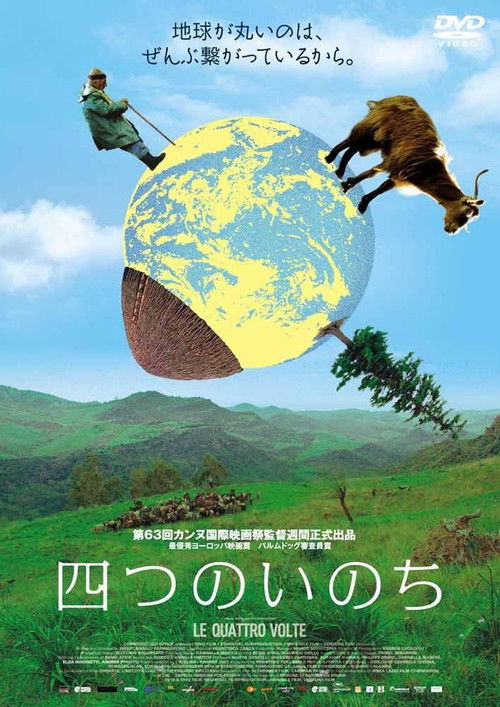
四つのいのち
The Four Times
イタリア最南端、カラブリアの丘の村に暮らす老いた羊飼い。病に侵された彼は、教会の床の塵を水に溶かして飲むという迷信的な治療法に頼っていた。ある晩、「魔法の粉」を使い果たした彼は絶望し、静かにベッドに横たわり、翌朝、眠るように息を引き取る。その後、彼のヤギの群れは新しい牧夫に引き継がれ、その中から1頭の子ヤギが誕生する…。
Italian filmmaker Michelangelo Frammartino tells the story of four lives that are born and die. Based on the Pythagorean concept of "four transmigrations," the film presents humans, animals, plants, and minerals with equal weight from a fundamentally egalitarian perspective that does not center the human world. After an elderly shepherd quietly dies in a mountain village in Calabria, southern Italy, his young goat dies beside a large fir tree. The tree is cut down for a village festival and eventually becomes charcoal. With no dialogue and long takes, the film captures nature as it is. In Japan, it screened in the natural TIFF section of the 23rd Tokyo International Film Festival in 2010 and was released theatrically in 2011. It will be released in 2026 as part of the special screening series "The Amazing World of Michelangelo Frammartino."
上映スケジュール / Showtimes
Source: cinematokyo.com · Tokyo mini-theater & independent cinema showtimes.