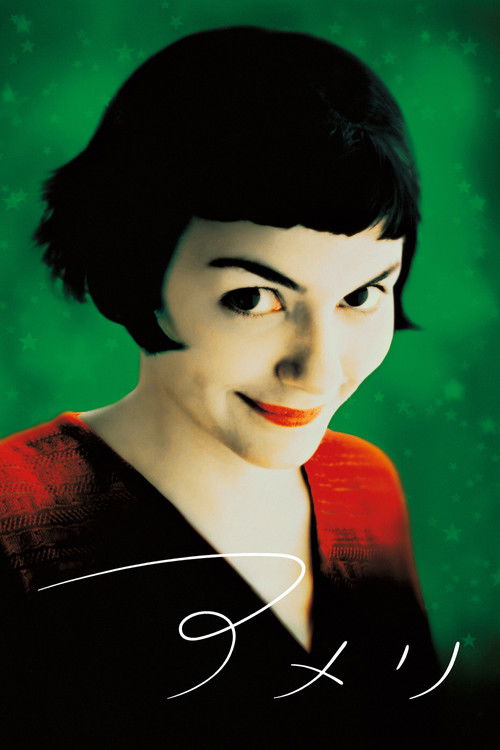
アメリ
Amélie
パリ・モンマルトルを舞台に空想好きな女性アメリの日常と不器用な恋の行方をポップな映像とブラックユーモアを交えて描き、フランスのみならず日本でも大ヒットを記録したロマンティックコメディ。 幼い頃から空想の世界で過ごしてきたアメリは、そのまま大人になり、モンマルトルの古いアパートに1人で暮らしながらカフェで働いている。他人とのコミュニケーションは苦手だったが、偶然発見した宝箱を持ち主に返したことをきっかけに、誰かを少しだけ幸せにすることに喜びを見出すように。そんなある日、アメリは他人の証明写真を収集する不思議な青年ニノと出会い、恋心を抱く。 オドレイ・トトゥが主人公アメリを魅力たっぷりに演じ、「クリムゾン・リバー」など監督としても活躍するマチュー・カソビッツがニノ役で共演。監督は「デリカテッセン」のジャン=ピエール・ジュネ。2023年、ジュネ監督監修のデジタルリマスター版でリバイバル公開。2026年、日本公開25周年を記念してリバイバル公開。
In 2001, one girl's story captivated all of Japan. Amélie, a slightly odd and dreamy girl who works at a café in Montmartre, Paris. Not very good at interacting with people, she one day finds an old tin box in the bathroom of her apartment. After finding its owner and returning the box, she begins playing 'small pranks' that make someone's life just a little happier. What Amélie then meets is Nino, an unusual young man who collects discarded photo-booth pictures. She is good at making others happy, but can't quite take the step toward her own happiness. This is the story of Amélie's love and small courage—a little clumsy girl. The vivid reds and greens, the streets of Montmartre, the retro and cute fashion Amélie wears, and the unforgettable music of Yann Tiersen. 'Amélie' went beyond being just a film to become a cultural phenomenon encompassing fashion, music, and interior design. When it opened in Japan on November 17, 2001, it started at just one theater, Cinema Rise Shibuya in Shibuya. On opening day, a long line formed in front of the theater, and the enthusiasm was covered by TV and magazines, spreading into a major social phenomenon. It recorded long-running hits in France and around the world, and in 2002 was nominated for five Academy Awards. Afterwards, film-related books, style books, and soundtrack sheet music collections were released, and even the Michael Sowa pig lamp in Amélie's room and the Paris locations featured in the film drew attention. People around the world were born who didn't just watch the film but became absorbed in the world of 'Amélie' itself. Cracking the surface of crème brûlée with a spoon. Skipping stones. Secretly setting up pranks for someone. Even if they aren't big events that change your life, there are moments in every day that make you a little happy. What 'Amélie' depicted was the accumulation of such 'small happinesses.' That hasn't changed even 25 years later. For those who encountered this film in 2001, memories of that time. For those who haven't seen it yet, the first encounter with 'Amélie.'
上映スケジュール / Showtimes
Source: cinematokyo.com · Tokyo mini-theater & independent cinema showtimes.