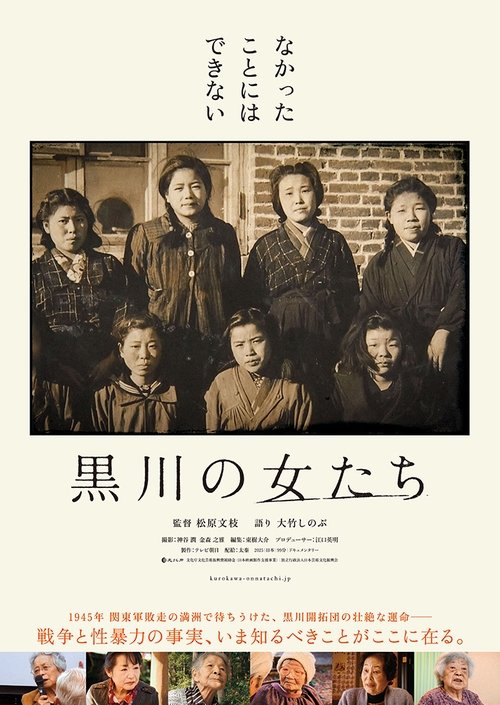
黒川の女たち
In Their Own Words: The Women of Kurokawa
戦時下の満州で黒川開拓団の女性たちに起きた「接待」という名の性暴力の実態に迫ったドキュメンタリー。 1930~40年代に日本政府の国策のもと実施された満蒙開拓により、日本各地から中国・満州の地に渡った満蒙開拓団。日本の敗戦が濃厚になるなか、1945年8月にソ連軍が満州に侵攻し、開拓団の人々は過酷な状況に追い込まれた。岐阜県から渡った黒川開拓団の人々は生きて日本に帰るため、数えで18歳以上の15人の女性を性の相手として差し出すことで、敵であるソ連軍に助けを求めた。帰国後、女性たちを待ち受けていたのは差別と偏見の目だった。心身ともに傷を負った彼女たちの声はかき消され、この事実は長年にわたり伏せられることになる。しかし戦争から約70年が経った2013年、黒川の女性たちは手を携え、幾重にも重なる加害の事実を公の場で語りはじめた。 そんな女性たちのオーラルストーリーを、「ハマのドン」の松原文枝監督が丁寧に紡ぎ出す。俳優の大竹しのぶが語りを担当。
A documentary that investigates the reality of sexual violence euphemistically called "entertainment" inflicted on the women of the Kurokawa settlement group in Manchuria during wartime. As part of the Japanese government's national policy in the 1930s-40s, the Manchuria-Mongolia settlement groups were sent from across Japan to Manchuria, China. As Japan's defeat became imminent, the Soviet army invaded Manchuria in August 1945, plunging the settlers into dire circumstances. To survive and return to Japan, the Kurokawa settlement group from Gifu Prefecture offered 15 women aged 18 and older (by traditional count) as sexual partners to the enemy Soviet army in exchange for help. After returning to Japan, the women faced discrimination and prejudice. Their voices, physically and mentally scarred, were silenced, and the truth was concealed for many years. However, about 70 years after the war, in 2013, the women of Kurokawa joined hands and began to speak publicly about the layers of harm they suffered. Director Fumie Matsubara, known for "Hama no Don," carefully weaves together these women's oral stories. Actress Shinobu Otake provides narration.
上映スケジュール / Showtimes
深谷シネマ
- 08-02 09:30
Source: cinematokyo.com · Tokyo mini-theater & independent cinema showtimes.